
Tax Deadline 2027names when your return is due
Your 2027 return and your payment each have a day of their own. Before either day, we close that month with Steven Palmieri. On this 2027 calendar, his role is Tax CFO, and he is the Entrepreneur's CFO.
A company return is often due in March, and a household return is often due in April. We name yours.
Find my due dateA calendar tells you the day. A Tax CFO makes the day boring.
The deadline is only frightening when the month before it is open. The Tax CFO closes the company month before March, hands the K-1 to the household return in time for April, and checks the year in October while it can still change. By the time the form is due, the number on it has been known for weeks.
See the monthWhich return is due


One day is the wrong ask
A shop with a company return and a household return is already holding two days. The return picks which one.
Click to see due dates ›Tap to see due dates ›
Last year's calendar
Changing the year on an old calendar keeps last year's weekday. In 2027 several of those weekdays moved.
Click to open calendars ›Tap to open calendars ›
A notice is not the day
A notice arrived with a date on it. That is a reply date, not a filing day, and we sort which one you are holding.
Click to read a notice ›Tap to read a notice ›
Which return is yours
Form 1120-S, Form 1065, Form 1040, Form 1120, or an estimate. The name is what makes a date yours.
Click to name the return ›Tap to name the return ›
Who closes the month
The month ahead of your day is the work, and Steven Palmieri, a Tax CFO and the Entrepreneur's CFO, closes it with us.
Click to meet the practice ›Tap to meet the practice ›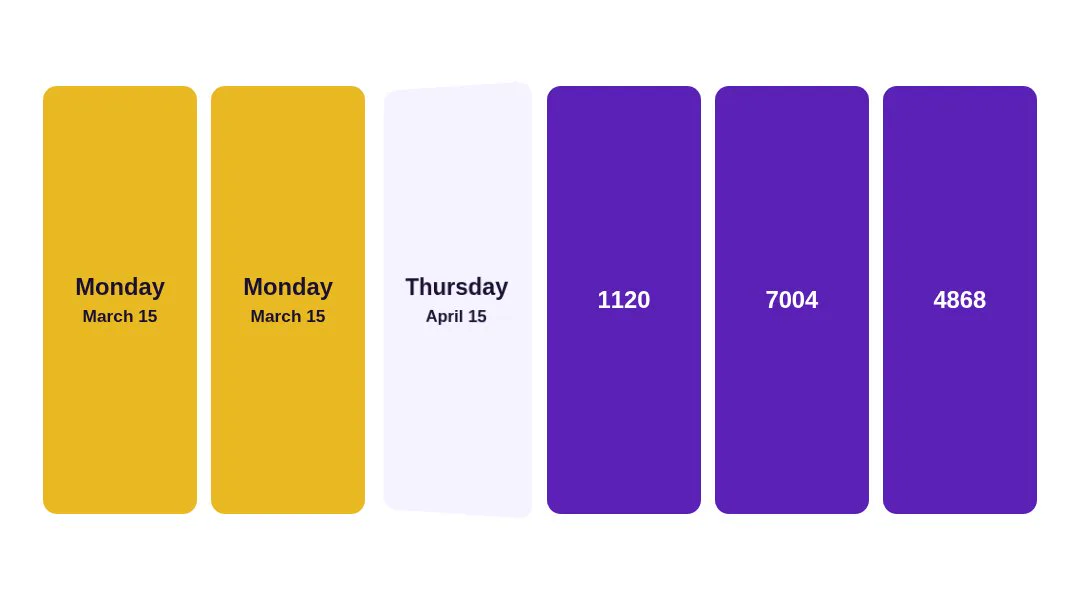
Six forms, six days
Open the form that sounds like yours. The day under it is the federal pattern for a calendar year, and your year end can move it.
1March company return
A calendar year S corporation or partnership, with the K-1s that ride along
March 15, 2027 is a Monday. We close the month before it so the K-1 is not a surprise in April.
2April individual return
A calendar year Form 1040, and often a calendar year C corporation on the same Thursday
April 15, 2027 is a Thursday. The first estimate of 2027 lands on that same day, so the payment and the return share it.
3Payment still due
An owner who filed for more time and treated the balance as moved too
The extra months finish the return. They do not move the day the money was due. We say that before anyone relaxes.
4September company file
An extended calendar year S corporation or partnership
September 15, 2027 is a Wednesday. October is a different form. We do not hand every company the later month.
5October individual file
An extended calendar year Form 1040 or Form 1120
October 15, 2027 is a Friday. The payment question is separate, and we ask it before we talk about the Friday.
6A year that is not December
A shop whose books close in a month other than December
We will not borrow December's days for a June year end. Tell us the month and we read the rule for that month with you.

Steven Palmieri, a Tax CFO and the Entrepreneur's CFO, is who picks up when you need the weekday named.
Click to meet Steven Palmieri ›Tap to meet Steven Palmieri ›The days a calendar year actually has
A receipt, a payroll a provider already runs, and a notice are three different pieces of the same year. The month before the day is the part we close. The day itself is only the form. A page that prints one date answers the wrong question. The form decides the day, and the month before that day is what we close.
The form you name is the only thing that picks the weekday, and we will say that weekday back to you before the call ends. A copied list from last year does not get to choose it.
People ask for the tax day in 2027 the way they ask for a single appointment. A calendar year does not work that way. March 15, 2027 is a Monday, and that Monday belongs to Form 1120-S and Form 1065, with the K-1 pages that ride along. April 15, 2027 is a Thursday, and that Thursday belongs to Form 1040 and to a calendar year Form 1120, and also to the first estimate of 2027. Two Thursdays are not the same form.
September 15, 2027 is a Wednesday. That Wednesday is the extended file date for a calendar year S corporation or partnership, and it is also an estimate date. October 15, 2027 is a Friday. That Friday is the extended file date for a calendar year Form 1040 or Form 1120. Handing every company the Friday is how a March form gets lost.
January 15, 2027 is a Friday, and it is the last estimate of 2026 for many people who pay that way. The next January, the 15th of 2028, falls on a weekend. When that date is a weekend, or when a holiday lands on it, the payment can shift to the following business day. The IRS estimated tax page is where that shift is confirmed. We do not print a substitute weekday on this site.
June 15, 2027 is a Tuesday, and it is the second estimate date in the ordinary four date pattern. April, June, September, and the following January. Missing that pattern is how an underpayment starts. We set the four dates beside the return. We do not print a penalty percent here, because a percent from memory is not your balance.
What more time does, and what it leaves
Form 4868 and Form 7004 buy months to finish a return. They do not slide the day the money was due. If a balance belonged on the original day, the extra months left it there. We say that before anyone treats a filed extension as a paid bill.
A K-1 from the company return has to exist before the individual return can be finished. Waiting on that page is why April feels stuck for an owner who also has a March form. It is a reason to close the company month first. It is not a reason to invent the number on the household return.
A shop whose books close in a month other than December cannot borrow December's days. Tell us the month the year ends and we read the rule for that month with you. We will not guess a fiscal day from the December pattern on this page.
A farm year or a fishing year can follow a different estimate rule in Publication 505. We do not reteach that rule here. If that is the year you keep, say so in the note and we will look at the publication with you rather than pretend the ordinary four dates are yours.
A receipt, a payroll, and a notice
A receipt in a drawer, a payroll a provider already runs, and a notice from the mail are three different pieces of one year. The receipt belongs in the month it was earned or spent. The payroll setup is work we will do. Payday itself stays with the provider you already chose, and the deposit calendar stays off these pages on purpose.
The notice is a different conversation from the day the form is due. We can read what the notice is asking and say which form it points at. Speaking on that notice in your place is outside this practice. If the next step is a hearing because the balance cannot be paid, that hearing is not booked here.
The useful month is the one before the day your form is due. If that month does not yet match your bank statement, the return is early no matter how close the Thursday looks. We would rather close the month than rush a number that will not tie.
Nothing on this page is a fee, a balance, or a result copied from another file. Weekdays were checked on a 2027 calendar. Confirm a line on irs.gov before you rely on it. A holiday can still move a day, and your own year end can move a line.
What to bring when you are ready
When the day is named, the next useful thing is the paper that proves which form it is. The prior business return, and a household return when one exists. Any access you already have to the current books. The extension, if one went in, and the payment that went with it. Entity paperwork if the company changed shape.
None of that has to be tidy to start the conversation. A missing page tells us as much as a finished one, because the gap is often the month that never closed. If the weekday was the only missing fact, the call can end on that fact.
The short note on this page does not start the work. Nothing is engaged, and no price is set, until a written scope is signed by both sides. Until then you can still use the days above, and you can still confirm them on irs.gov.
Tell us the return
Say the return and the month the year ends. We will tell you the day, and we close the month before it.